

Blog
Buying a set: how to tell it will arrange well before it arrives

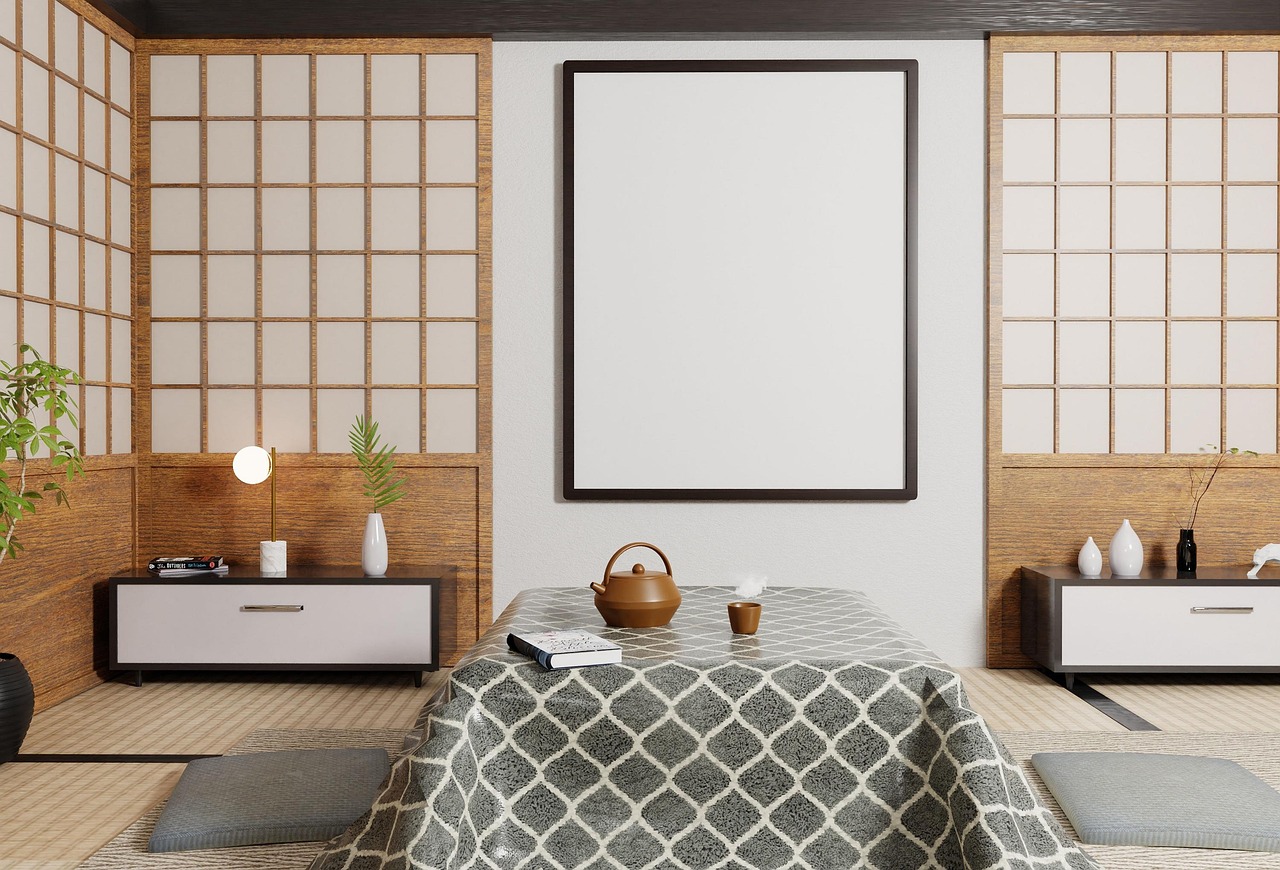
Sets are photographed in one arrangement, on one wall, in one room. That photograph is useful for judging the pieces and misleading for judging the arrangement, because your wall is a different width and your furniture is a different height.
Total span, not piece size
Add the widths of every element plus the gaps between them. That total is what has to fit your wall and relate to the furniture below. A set of four 7 by 16 inch panels at three inch gaps spans 37 inches, which is different from what four separate pieces suggest.
Compare that number against two thirds of your furniture width before anything else.
Whether the arrangement is fixed
Some sets only work in the arrangement shown, because the elements form a continuous image or a deliberate asymmetry. Others are independent pieces that happen to be sold together and can be arranged freely.
The listing photographs usually make this clear if there is more than one. Where there is only one, assume the arrangement is fixed and plan for it.
Element count and what happens if one breaks
A set of six is six chances of transit damage and six pieces that must match. Replacement elements are rarely sold separately, so a broken piece often means returning the set. Check the return terms for partial damage before buying a large set.
Count and inspect on arrival, before hanging anything and before the return window closes.
Depth, for shelves and hallways
Sets intended for a shelf need the shelf depth stated. Wall sets in a hallway need a projection figure. Both are frequently omitted and both are the dimension that decides whether the piece works in the position you have in mind.
If depth is not stated, it is worth asking rather than assuming.
Colour consistency across a set
Pieces in natural materials vary. Wood grain, jute colour and hand-finished metal will not be identical, and in a set that is usually a feature. In a set that is meant to read as uniform, it is a problem.
Listings that say “variation is natural” are telling you something accurate. Sets photographed as identical and made from natural material may not arrive identical.
Fixings supplied, and their rating
Sets often ship with adhesive strips or small nails sized for the lightest element. Using the supplied fixing on the heaviest piece is how a set comes off a wall. Weigh or check the stated weight per piece and fix accordingly.
Buying appropriate anchors separately costs very little and is almost always the right decision.
Planning the layout on the floor
As with a gallery wall, lay the set out on the floor before touching the wall. This is when you discover whether you want the arrangement in the photograph or a different one, and it costs nothing.
Photograph your floor layout so you can reproduce it when transferring to the wall.
Mixing a set with pieces you own
A set can be broken up and distributed among existing pieces, which often suits a real room better than the photographed block. This works best when the set’s elements share a material or a palette with what you already have.
It also means a set does not have to fit one wall exactly to be worth buying.
The measurements we publish
Every set here states the number of elements, the measured size of each, and the overall dimensions of the arrangement shown. Where a piece has meaningful depth, that is stated too.
Those figures let the whole decision be made on a floor with a tape measure, which is where it should be made rather than against a photograph.
Buying a set: what to check
- Add element widths plus intended gaps for the total span
- Compare that span to two thirds of the furniture width
- Establish whether the arrangement is fixed or free
- Check depth if the piece is for a shelf or a hallway
- Expect natural variation in wood, jute and hand-finished metal
- Confirm the return terms for damage to one element
- Do not rely on supplied fixings for the heaviest piece
- Count and inspect on arrival before hanging
- Lay the set out on the floor and photograph the layout